Trending Topic

Dragon Ball Z or DBZ Kai: Which should you watch now?

Article Summary

Name a more iconic anime than Dragon Ball. Yeah, I’ll wait. Dragon Ball has been around since the 1980s, and there have been more characters, stories, and hair-changing transformations than one can remember. Die-hard fans can list them all out, but what about new fans who want to get into the series? It’s quite the intimidating order. The original series is quite explanatory, but what about Dragon Ball Z? That series has had multiple versions. There’s the original anime, Dragon Ball Z, which came out in the late 1980s and eventually made its way worldwide in the 1990s and the early 2000s. There’s also Dragon Ball Z Kai, a late 2000s remastered version of the anime. Both anime tell the same story, but the experience is a little different depending on what you’re looking for.

Dragon Ball Z needs no introduction. This anime originally aired in the late 80s in Japan. It continues Akira Toriyama’s story from the original Dragon Ball manga series. The “Z” was added in the anime versions to denote a more action-focused change, since the original series was more comedy mixed with some martial arts. The DBZ anime covers the famous arcs in this order: the Saiyan, Frieza, Android, Cell, and Buu Sagas. These story arcs have been adapted into so many video games and supplemental media due to their popularity. 

The Original Dragon Ball Z and Kai

The key characteristics of the original DBZ anime are the slow pacing, the heaps of filler episodes, the extended fight scenes, and the classic voice acting and soundtrack. The English Dub that many fans know from the original DBZ run was done by Funimation, and these voice actors have been voicing the characters for decades now. The soundtrack was also redone. Funimation had Bruce Faulconer make a more electronic-sounding arrangement for the anime that made hype moments exhilarating. Many fans still swear by the original DBZ anime due to the nostalgia associated with all of these elements, specifically the voice acting and soundtracks. 

Moving on to Dragon Ball Z Kai, this was a 2009 remastered version of the anime. The main goal of it was to cut the filler from the original, improve the pacing, and update the visuals, music, and voice acting. DBZ Kai is much shorter than the original, coming in at 167 episodes. The original DBZ was 291, if you can believe it. Kai is much tighter and more manga-accurate due to all of the anime-only filler being reduced. Some fans prefer Kai due to how much easier it is to watch in comparison to the original. There’s less time to commit to watching it, and the filler is completely gone. The voice acting is totally redone, too. Almost all of the original actors come back, and the new ones, specifically Bulma and Kid Gohan’s actors, do a great job at keeping the original spirit of the characters. 

DBZ vs Kai

Comparing the two series against each other brings the differences to light. Pacing has got to be the biggest difference here. As mentioned earlier, there are over 100 episodes cut from the original DBZ anime. What are these cuts? They are not story-related; they are instead filler-related. When the original DBZ anime was airing, it was outpacing the manga. The animation studio, TOEI, had to artificially slow the pace of the show so that it didn’t veer off from what Akira Toriyama’s original manga would do. This led to not only fight scenes getting extended, but full-on arcs and side plots being added. 

Some of these arcs fans dislike, such as the “Fake Namek arc” or the “Garlic Junior arc.” These two arcs are nostalgic for many, but mean nothing in the grand scheme of the series. The most they serve is a “remember when” conversation between two long-time Dragon Ball fans. Kai gets rid of every single piece of filler that was not in the original manga. Many fans love this, but there are very few bits of filler that fans have come to love. Most notable being the one-off episode where Goku and Piccolo get their driver’s licenses. Why would these characters who can fly at immeasurable speeds need a learner’s permit?

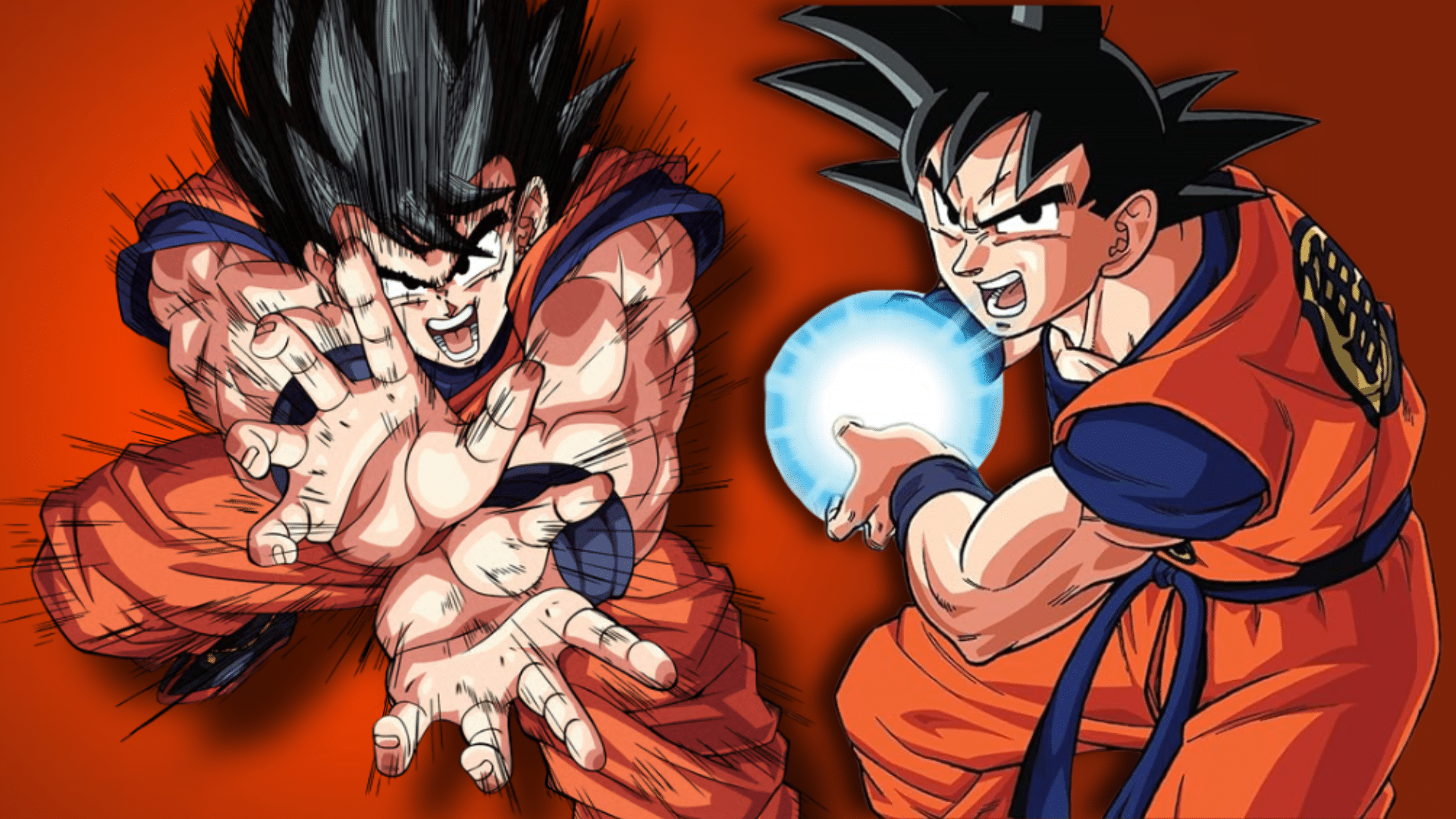
Goku–Gohan Father–Son Kamehameha

Voice Acting and Different Music

Great question, but fans got a really charming and funny episode here. This episode is so popular that even modern DBZ games like Dragon Ball FighterZ will throw in character skins referencing this episode. It should also be noted that the voice acting and music of DBZ and Kai are quite different. DBZ has a very famous English dub and soundtrack, but early on, some of the voice actors hadn’t found their iconic voices for their characters yet. Compare Vegeta’s English voice from the start of the series to how he sounds at the end. Vegeta has had many dub voices, but in the original Funimation dub, it’s quite obvious to hear how his voice changes. There’s a uniform voice, but there’s certainly a difference. In Kai, however, since these actors are now veterans, the quality of the voice acting is just superb from the get-go. 

The translation and dialogue in Kai are also a lot more accurate to the manga. In the original DBZ dub, some lines were changed. When Goku turns Super Saiyan against Frieza in the original DBZ anime, Goku comes off a lot more like Superman, per se, saying he is the “hope of the universe.” In the Kai translation, Goku wants to defend his planet and friends, but his main motivation is because he loves fighting strong opponents. Maybe the most controversial change has to be the music. For the Japanese broadcast of DBZ, Shunsuke Kikuchi did the soundtrack. This soundtrack is iconic to the series as a whole. When DBZ came to the States, as mentioned earlier, it was redone by composer Bruce Faulconer, and he gave the music a much more industrial, electronic tone that really suited how bombastic the fights became. 

Fans still hold the Faulconer soundtrack in high regard, as they should. It’s great. Now, for Kai, the soundtrack was unified for both English and Japanese releases. Kai had a new soundtrack composed by the infamous Kenji Yamamoto. Yamamoto composed many DBZ-related soundtracks for the video games and supplementary media over the years. I say infamous here because in 2011, he was accused of and then fired for plagiarism. Yes, many of his ear-catching arrangements were found to be total plagiarisms of various bands, all the way from Stratovarius to the Beatles. Once this happened, later releases of Kai, both in English and Japanese, used the original DBZ Kikuchi score. Some things you just can’t win, eh?

Animation Changes

Lastly, it should also be noted that while Kai reuses all the animation from the original DBZ anime, TOEI Animation had to reanimate certain scenes. This may have been due to them not having the original stills from the 80s and 90s, but these scenes are admittedly a little jarring. To a casual fan, on first viewing, you may not notice them. But to a veteran fan, these redraws are quite obvious. They aren’t ugly by any means; they just are quite noticeable. With all of this said, if you are a newcomer, which one should you dive into? Well, it all depends on what you enjoy most about anime, but it is a very easy decision to make.

Which One Should You Watch?

In my opinion, if you are a new fan and want to get into DBZ in 2026, there’s almost no reason not to watch Kai instead of the original. The original DBZ is great if you watched it briefly as a kid, or love that classic 90s anime vibe of slow-burning storytelling with cheesy and fun voice acting. Those extra filler scenes are really fun too, like the ones mentioned previously. There are other excellent filler episodes I didn’t even mention, like Gohan running into Taopaipai, a villain Goku fought when he was a child. Gohan being leagues stronger than Tao makes for some great comedy that harkens back to the original Dragon Ball. It’s also worth mentioning that Gohan gets a ton of development in both series and is definitely a standout character in DBZ.

But again, while Kai has no filler, it is almost always the better option. Kai has much less of a time commitment, has better pacing, and a snappier speed to it all. It should be noted that the full DBZ Kai experience is to watch DBZ Kai, as well as DBZ Kai: The Final Chapters. Don’t be confused, the Final Chapters is just the Kai version of the Buu saga, the final arc in the series. Figured a bit of an explanation would be due there. The Final Chapters originally came out a couple of years after DBZ Kai. For whatever production-related reason, they chose to take their time with that. Perhaps they wanted to round off Kai with the final arc to end the debate of which show modern fans should watch. 

Speaking of, the greatest solution is honestly this: if you’re a new fan who wants a quicker watch, but doesn’t want to miss out on the old school soundtrack and fun, filler moments, do this. Watch Kai, and when you’re done, watch the original filler episodes that are enjoyable on your own time. That’s the best of both worlds. It’s what, no doubt, many fans do nowadays. Asking someone to sit down and watch an anime with almost 300 episodes is very old-fashioned by today’s metrics. Now, even the longest-running anime are seasonal and cut out filler. Look at a show like Bleach. This anime had hundreds of episodes of filler, genuinely. Now, with the new, final arc, they separate it into different batches and animate it that way. No filler, all manga-accurate action. 

At the end of the day, Dragon Ball Z is one of the biggest anime of all time. Most people nowadays should start with DBZ Kai. If you’re a mega-fan and want to get the full, 1990s Dragon Ball Z experience, then yes, the original is always on the table. It is still worth watching for hardcore fans due to the nostalgia of it all. Either way, whatever you end up picking, you’re going to be getting one of the most influential and popular anime stories ever. DBZ introduced series-staple characters like Gohan, Piccolo, Vegeta, and so much more. You can’t go wrong with how you watch it. So, pick a version and Rock the Dragon!

For more on Dragon Ball and other anime, click here to stay connected with PopPulse Digest our free newsletter to be the first to know when we post a new article and be the first to watch our newest videos before anyone else on YouTube. 
📬Sign up to PopPulse Digest, our free weekly newsletter, and join the community here to stay plugged into pop culture across gaming, anime, and comic book TV & movies, notable deals, plus more.
ABOUT AUTHOR

Leave a Reply

Your email address will not be published. Required fields are marked *

man looking confused or surprised towards camera Previous post Every Dragon Ball Timeline and Continuity Explained for New Fans