Trending Topic
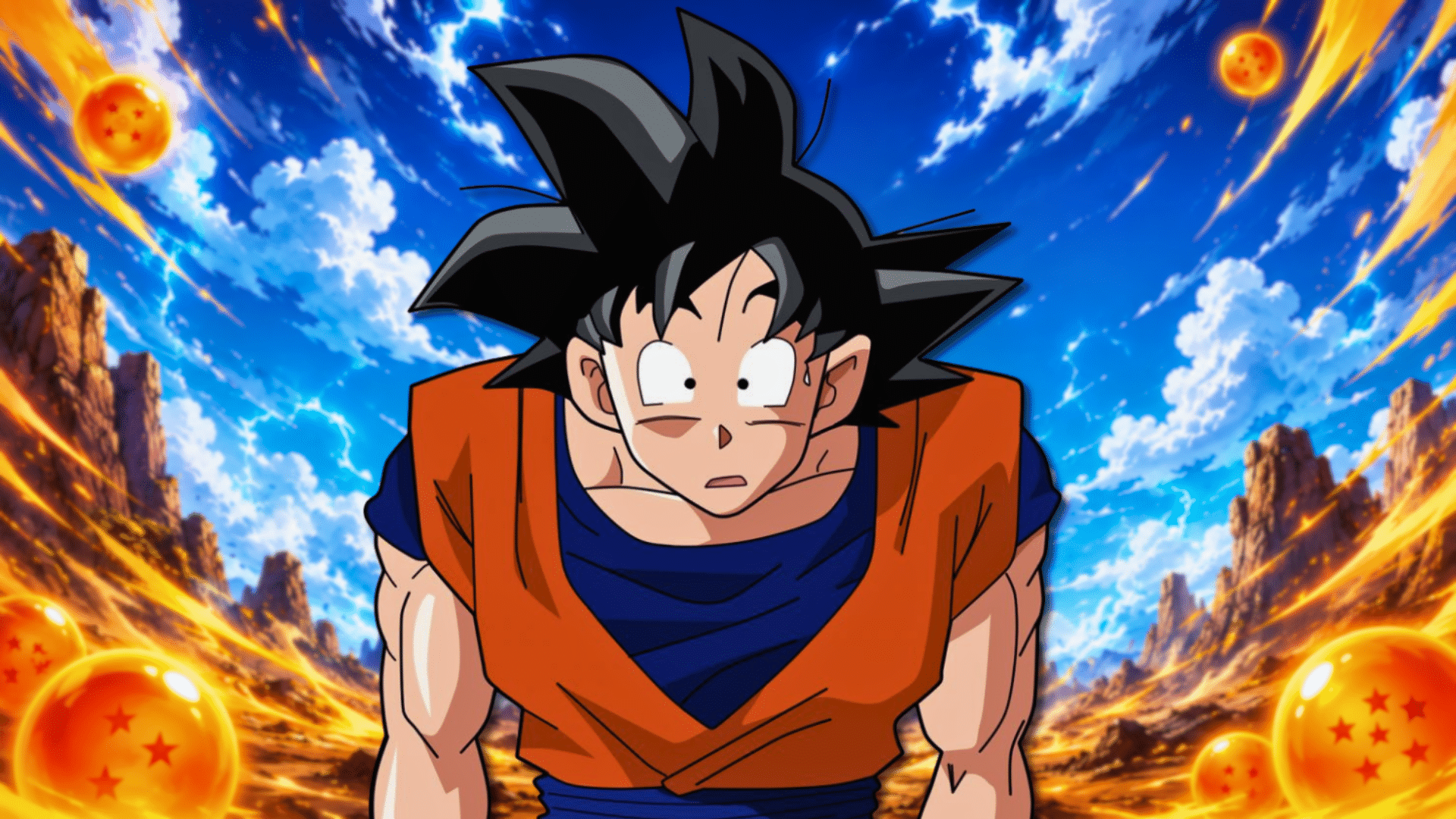
man looking confused or surprised towards camera

Every Dragon Ball Timeline and Continuity Explained for New Fans

Article Summary

Okay, so at first glance, the Dragon Ball timeline looks pretty easy to understand. But it gets messy fast. The moment time travel shows up thanks to Future Trunks and Cell, and once you start factoring in Dragon Ball GT and Super Dragon Ball Heroes as extra branches, the whole thing starts looking less like a straight road and more like a freeway interchange with no signs.

The simplest way to think about it is to treat Universe 7 as the main path. That’s where Goku, Vegeta, Gohan, Piccolo and the rest of our cast of heroes live. Above all of them sits a cosmic structure of divine beings: Supreme Kais, Gods of Destruction, angels, and right at the top, Zeno, the Omni-King, who can erase entire universes just because he feels like it.

So here’s the short version: the main canon goes from the oldest cosmic events through Goku’s adventures, the Saiyan and Frieza sagas, the Androids, Cell, Majin Buu, Daima, Super, and the End of Z. Then branching off from that are Future Trunks’ ruined timeline, Cell’s original timeline, the replacement future for Trunks and Mai, GT as an alternate sequel, and Super Dragon Ball Heroes as a non-canon multiverse playground. Once you see it that way, it actually makes a lot of sense.

150+ Million Years Ago: The Creation of the Multiverse

Before Goku ever crash-landed on Earth, before any Dragon Balls or tournaments or Saiyans, Dragon Ball history was already deep in motion. According to the timeline, more than 150 million years ago, the Demon Realm already existed. Then a powerful being named Rymus, acting on orders from the Good Supreme Demon King, expanded the Demon Realm by creating multiple universes. That’s a big deal, because it means the Dragon Ball multiverse didn’t just pop up out of nowhere. It was built on purpose.

Zeno is then put in charge as ruler of the whole multiverse. He sits at the absolute top and has the kind of power that makes blowing up a planet look like a minor inconvenience. He can wipe out entire universes with a wave.

This earliest era also gives us some of the core races and divine roles that matter later. The Demon Realm is home to majin, the Glind, and early Namekians. Some majin eventually move into the newly formed universes. Rymus picks certain members of the Glind to become Supreme Kais, who are essentially gods of creation, each one watching over a universe. On the flip side, beings like Beerus serve as Gods of Destruction, tearing down what threatens the balance. And that whole structure has been running since before any of the characters we know even existed.

The Super Dragon Balls and the Ancient Era

Not long after the multiverse gets put together, the Dragon Balls themselves show up, but not the ones you’re probably thinking of. A dragon god named Zalama creates the Super Dragon Balls, spreading them across Universe 6 and Universe 7. These are described as the first and most powerful Dragon Balls ever made, which makes them the original version of the whole wish-granting concept the franchise is built on. Unlike the dragon balls we come to no later, the Super Dragon Balls are enormous, cosmic-scale objects.

This laid out the foundation for later arcs in Dragon Ball Super. Long before Goku went Super Saiyan, long before Vegeta stopped being the bad guy, the gears of the multiverse were already turning.

10 – 5 Million Years Before Age: Ancient Threats Before the Main Story

So the cosmos and the Super Dragon Balls exist, the divine structure is in place, but what happens next? Chaos, basically. Around 10 million years before the start of the main story, a villain named Moro, who later becomes a major threat in the Dragon Ball Super manga, is already terrorizing Universe 7 before eventually being defeated and locked away by the Supreme Kais. Then, around 5 million years before the main story, things get even worse.

That’s when Majin Buu first appeared. He’s created in the Demon Realm at the request of Bibidi, an evil alien wizard who wants to take control of Universe 7. Buu’s rampage is massive. He destroys countless planets and kills most of the Supreme Kais. And, remember, these aren’t ordinary fighters. They’re divine beings connected to the structure of life in the universe. The fact that Buu wiped out most of them tells you exactly how terrifying he is. Eventually the East Supreme Kai, Shin, kills Bibidi and seals Buu away on Earth. But, as you probably know, the danger isn’t gone, just buried.

Later, Babidi, usually described as Bibidi’s son or clone, shows up during the DBZ era trying to bring Buu back. That pattern is very Dragon Ball. Ancient threats don’t disappear. They wait. Moro and Buu are both perfect examples. The Z-Fighters don’t just fight new enemies. They inherit unfinished business from gods and demons who lived millions of years before them.

1,000 Years Before Age: Namekians Leave The Demon Realm

Thousands of years before the main story, the Namekians leave the Demon Realm and migrate into Universe 7, eventually settling on Planet Namek and building a spiritually advanced civilization. That migration is one of the most important events in Dragon Ball history, setting up the foundation for the Dragon Balls.

Age 261-470: Birth of Earth’s Dragon Balls

Later disaster hits. In Age 261, a catastrophic storm devastates Planet Namek, causing a drought that nearly wipes out the entire Namekian population. Only one child survives, the son of a Namekian named Katas, who was sent away from the planet before things got bad. That child eventually becomes known as the Nameless Namekian, and his survival changes Earth’s future in a huge way.

By around Age 431, the Nameless Namekian becomes the apprentice of Earth’s Guardian. Over the following decades, he grows into the role and is chosen to become Earth’s next Guardian. But there’s a catch: the position requires a pure heart. So he separates the evil within himself into a different being. His purified self becomes Kami, Earth’s new guardian, while his evil half becomes Demon King Piccolo. One being, split into opposites. God and demon, creator and destroyer, born from the same source.

Around Age 461, King Piccolo nearly throws Earth into chaos before being sealed away. Then in Age 470, Kami creates Earth’s Dragon Balls.

Age 550-732: Early Saiyan History

Long before Goku was born, the Saiyans already had a reputation as one of the most feared warrior races in the universe. Their original home was Planet Sadala, but around Age 550, Sadala was destroyed in a Saiyan civil war. That collapse forced the surviving Saiyans to find a new world, and they ended up on Planet Plant, a planet that was already home to the Tuffles, a technologically advanced native species.

For a while, Saiyans and Tuffles shared the planet, but the two groups couldn’t have been more different. The Tuffles were scientific, urban, and sophisticated. The Saiyans were physically powerful, rough, and warlike. It was always going to fall apart.

Around Age 720, war breaks out between them. The conflict drags on, partly because the Tuffles’ advanced tech kept the Saiyans at bay. But around Age 730, a full moon appears and that changes everything. The Saiyans transform into their Great Ape forms, and with that level of power, they wipe out the Tuffles entirely, seize control of the planet, and rename it Planet Vegeta, taking the Saiyans from displaced warriors to conquering rulers overnight.

Shortly after, in Age 731, King Cold brings the Saiyans under his empire and puts them to work in conquering planets. In Age 732, Vegeta and Broly are born. Around the same time, King Cold retires and Frieza takes over as the Saiyans’ new boss. Broly’s abnormal power worries King Vegeta and the elite members of Saiyan society so much that they exile him to another planet, with his father Paragus going after him.

Age 737-749: Goku’s Origins and Early Life on Earth

In Age 737, Saiyan warriors Bardock and Gine have a son they name Kakarot, the kid we’ll all come to know as Son Goku. Around the same time, the Saiyans invade Planet Cereal in the manga, an event that becomes important to the Granolah arc much later. But the moment that changes everything is Bardock’s suspicion that Frieza plans to destroy Planet Vegeta. Acting on that fear, he puts baby Kakarot in a pod and sends him toward Earth. About a month later, Frieza destroys Planet Vegeta, wiping out almost the entire Saiyan race in one shot. His reason? Fear of the Saiyans’ growing power and a legend about a mythical Super Saiyan.

Kakarot lands on Earth and is found by Grandpa Gohan, who raises him as his grandson and gives him the name Goku. During his childhood, Goku takes a bad fall, hits his head, and loses most of the violent Saiyan nature he was born with. That accident might genuinely be one of the most important moments in Dragon Ball history. Without it, Goku may have become a destructive force the Saiyans built him to be. With it, he grows up into a kind-hearted, battle-loving protector.

That said, Saiyan biology doesn’t just disappear. One night under a full moon, Goku transforms into a Great Ape and unknowingly kills Grandpa Gohan. That loss leaves him alone in the mountains until Bulma eventually wanders into his life.

One non-canon movie branch worth placing here is Bardock – The Father of Goku. It works as an alternate look at Bardock’s final stand and the destruction of Planet Vegeta, taking place in Age 737, right beside Kakarot being sent to Earth and Frieza wiping out the Saiyans. It is not the main modern canon version of Bardock’s story, but it is still an interesting and different version of those same origin events.

Age 749–760: Dragon Ball

The main Dragon Ball story kicks off in Age 749 when Bulma meets Goku while she’s out searching for the Dragon Balls. That one meeting lights the fuse on the whole franchise. From there, they meet Oolong, Yamcha, Puar, Master Roshi, and the Ox-King with his daughter Chi-Chi. After Goku helps with the crisis at Frying Pan Mountain, where the Ox-King’s castle is trapped behind magical flames, Chi-Chi asks him to marry her when they grow up, and Goku agrees without really understanding what that means.

The first big Dragon Ball hunt wraps up with Emperor Pilaf swiping the Dragon Balls and summoning Shenron, only for Oolong to jump in and wish for a pair of panties before Pilaf can wish for world domination. Then Goku sees the full moon, turns into a Great Ape, and demolishes Pilaf’s castle.

Then Goku meets Krillin, and the two train under Master Roshi, leading into the 21st World Martial Arts Tournament, where Roshi, disguised as Jackie Chun, defeats Goku on purpose to make sure he keeps pushing himself.

Another alternate movie branch that takes place in this early period is Sleeping Princess in Devil’s Castle. It fits after Goku meets Krillin and begins training under Master Roshi, but it is still considered non-canon. Since the movie plays like an alternate adventure from that training era, it works best before the timeline moves fully into the 21st World Martial Arts Tournament and the Red Ribbon Army conflict.

By Age 750, Goku clashes with the Red Ribbon Army, a powerful military group hunting the Dragon Balls. He destroys them, but their legacy will come back in a big way much later. In Age 753, the 22nd Tournament introduces Tien and Chiaotzu, and Tien defeats Goku. Not long after, King Piccolo is released, goes on a rampage, and kills Krillin, Roshi, and Chiaotzu, though they’re eventually revived. Goku defeats King Piccolo, but before dying, Piccolo spits out an egg containing Piccolo Jr., making sure the rivalry doesn’t end there. After three years of training with Kami and Mr. Popo, Goku defeats Piccolo Jr. in the 23rd Tournament in Age 756, wins the whole thing, and marries Chi-Chi. By Age 757, their son Gohan is born, and the story naturally moves into its next chapter.

Age 761–774: Dragon Ball Z

The saiyan Saga


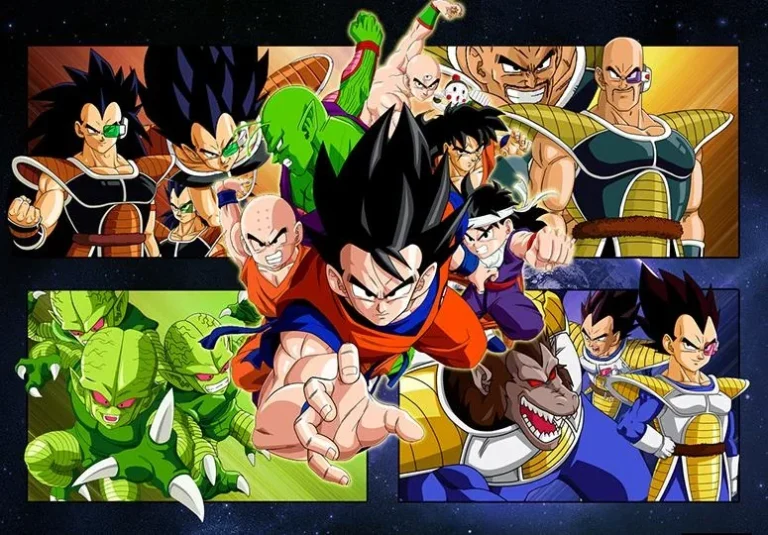
By Age 761, Dragon Ball shifts from a martial arts adventure into a full-blown sci-fi epic when Raditz shows up, and it turns out he’s Goku’s older brother. Raditz drops two bombshells: Goku’s real name is Kakarot, and he’s a Saiyan from Planet Vegeta, not just some guy who grew up in the mountains. To deal with Raditz, Goku and Piccolo team up in an uneasy alliance, and Goku sacrifices himself so Piccolo can take Raditz out with the Special Beam Cannon. But Raditz’s scouter sends everything back to Vegeta and Nappa, who now know about Earth’s Dragon Balls and start heading over. That single moment swings the door wide open to the galactic scale that defines the rest of Dragon Ball Z.

In Age 762, while dead, Goku trains with King Kai and learns the Kaioken and Spirit Bomb. When Vegeta and Nappa finally arrive, the battle kills Yamcha, Tien, Chiaotzu, and Piccolo. Because of Piccolo’s connection to Kami, Earth’s Dragon Balls go dark. Goku eventually shows up, defeats Nappa, and goes head-to-head with Vegeta in what becomes one of the most iconic fights in anime history. Goku, Krillin, Gohan, and Yajirobe work together to take Vegeta down, and he retreats. Around this same time, a tiny spy robot sent by Dr. Gero quietly collects blood samples from the fighters, which will eventually be used to create Cell. Small detail with massive consequences.

This early DBZ time period is also where several alternate movie events fit best: Dead Zone, The World’s Strongest, The Tree of Might, and Lord Slug. They should be treated as alternate branches rather than mainline canon, but this is the cleanest place to mention them because they sit in that early Z power-scale window before the Android and Cell story takes place.

The Frieza Saga

After the Saiyan battle, Gohan, Krillin, and Bulma head to Namek to use that planet’s Dragon Balls to revive their fallen friends, while Goku recovers and follows later. This leads to the The Frieza Saga that becomes a three-way conflict between the heroes, Vegeta, and Frieza’s forces, with the Ginyu Force thrown in on top of that. The Namekian Dragon Balls are eventually used to bring back Piccolo, which restores Kami and reactivates Earth’s Dragon Balls. Then comes the moment in which Frieza kills Krillin, and Goku transforms into a Super Saiyan for the first time. Goku defeats Frieza, Planet Namek is destroyed, and the surviving Namekians relocate to a new homeworld.

Time Travel Changes Everything

In Age 763, Cell actually arrives from the future first, traveling back from his original timeline in Age 788 using a stolen Time Machine. He hides underground for years, waiting for Dr. Gero’s androids to show up. Around the same time, Frieza somehow survives Namek’s destruction, gets rebuilt into Mecha-Frieza by his father King Cold, and heads to Earth for revenge. Then in Age 764, everything changes: Future Trunks arrives out of nowhere and kills both Frieza and King Cold soon after they arrive on Earth, but before they can do anything. It’s not just a cool entrance. It’s the moment Dragon Ball stops being a single linear story and becomes one main path with parallel timelines.

Trunks explains that in his original future, Goku came back to Earth and defeated Frieza and King Cold himself, but then Goku later died from a heart virus. After that, Dr. Gero’s Androids appeared and basically destroyed everything. To stop that from happening, Trunks gives Goku heart medicine and warns the Z Fighters that the androids are coming in three years. That warning creates the first major fork in the road: Trunks’ ruined future still exists, but the present he changes is now moving in a different direction.

During those three years, the Z Fighters train hard. Vegeta becomes obsessed with catching up to Goku and eventually hits Super Saiyan, while his relationship with Bulma deepens at Capsule Corp. In Age 766, Trunks is born in the main timeline, and Future Trunks timeline.

The alternate non-canon movie events of Cooler’s Revenge also take place during Age 766, while branching off from the main timeline. Since Cooler’s story is built around Frieza’s brother coming to Earth after Frieza’s defeat, it falls in the gap between Namek’s aftermath, Future Trunks’ warning, and the three-year build toward the Android threat.

Androids/Cell Saga

In Age 767, the predicted android threat actually arrives. Android 19 and Android 20, who turns out to be Dr. Gero himself, attack a city. During the fight, Goku gets hit by the heart virus, but unlike what happened in Trunks’ ruined future, he survives because of the antidote Trunks brought. Vegeta, now a Super Saiyan, destroys Android 19. Then Piccolo goes after Dr. Gero, who escapes and activates Androids 17 and 18, who immediately turn around and kill him. They wake up Android 16 and go looking for Goku. And then Cell shows up, a bio-android built from the DNA of the strongest fighters, to complicate everything further. Not long after, Piccolo fuses with Kami, making himself much stronger, and confronts Cell.

This is where Dragon Ball’s timeline branches become impossible to ignore. In Future Trunks’ timeline, the Androids showed up years earlier and killed almost every Z Fighter except Future Gohan, who became Trunks’ mentor. Meanwhile in the main timeline, the heroes use the Hyperbolic Time Chamber to push past the normal Super Saiyan limits. Vegeta and Trunks train first, then Goku and Gohan. Cell hunts the Androids, absorbs 17 to hit his semi-perfect form, and then, because Vegeta lets him, thinking it’ll be a better fight, absorbs 18 and reaches his perfect form.

Cell then announces the Cell Games. Goku fights first but steps aside, convinced Gohan has even greater hidden power. When Cell kills Android 16 and pushes Gohan emotionally past his limit, Gohan transforms into Super Saiyan 2. Cell tries to blow up the Earth by self-destructing, so Goku grabs him and teleports to King Kai’s planet to keep Earth safe. Cell survives and comes back stronger, but Gohan wins the final clash with a Father-Son Kamehameha.

The Android and Cell era in Age 767 also has a series of alternate movie branches: Super Android 13!, The Return of Cooler, Broly – The Legendary Super Saiyan, and Bojack Unbound. Super Android 13! and The Return of Cooler fit near the Android threat, Broly – The Legendary Super Saiyan lines up with the broader Cell-era power escalation, and Bojack Unbound works best after Cell’s defeat because Goku is dead, while Gohan has already stepped into the hero role.

The Great Saiyaman Saga & Buu Saga

After Cell’s defeat, Earth gets seven years of actual peace between Age 767-774. Goten is born, Vegeta settles more into life at home as Trunks’ dad, and Gohan, now a teenager, goes to high school while secretly fighting crime as the Great Saiyaman. It’s a lighter stretch of the timeline. But by Age 774, the calm breaks when Goku comes back from the afterlife for a single day to compete in the 25th World Martial Arts Tournament. The Supreme Kai shows up and reveals that Babidi is trying to collect enough energy to bring Majin Buu back.

The heroes fight Babidi’s minions, and Vegeta, giving into the darkness that’s always been inside him, lets Babidi’s magic turn him into Majin Vegeta so he can force a proper rematch with Goku. Their fight generates enough energy to wake Buu. Realizing what he’s done, Vegeta sacrifices his life trying to destroy Buu, one of the most genuinely emotional moments in the entire series. Goku shows off Super Saiyan 3 but doesn’t finish Buu himself; he wants the next generation to step up. That leads to the Fusion dance, with Goten and Trunks combining into Gotenks, while Gohan gets taken to the Sacred World of the Kais to have his hidden power properly unlocked by Old Kai.

Buu shows a flash of innocence through his friendship with Mr. Satan and a dog named Bee, but once that peace is shattered, he splits into the far more dangerous Super Buu. Super Buu goes after everyone, fights Gotenks, battles an empowered Gohan, and absorbs them and Piccolo one by one. Goku returns with a new life temporarily granted by Old Kai, Vegeta comes back, the two fuse into Vegito, and they weaken Buu from the inside by rescuing everyone he absorbed. Buu eventually reverts to Kid Buu, destroys Earth, and the final battle moves to the Sacred World of the Kais. Earth gets restored by the Dragon Balls, the dead are revived, and Goku destroys Kid Buu with a Super Spirit Bomb. Buu is later reincarnated as a human child named Uub, which sets up the very end of the Z era that comes into play later in the main timeline.

The alternate movie events of Broly – Second Coming and Bio-Broly fit during the post-Cell, pre-Buu period where Gohan, Goten, and Trunks are active. Meanwhile the movie Fusion Reborn lines up closest with the Buu Saga with the appearance of Gogeta, and Wrath of the Dragon fits best after the Buu conflict as a late-Z alternate adventure before the timeline moves on to the next chapter.
Age 775: Dragon Ball Daima

Daima kicks off right after the Buu saga, in Age 775, and its placement matters a lot. It sits between Dragon Ball Z and Dragon Ball Super, connecting them directly rather than floating off in some separate pocket of the timeline.

On Trunks’ ninth birthday, three figures named Gomah, Degesu, and Neva use Earth’s Dragon Balls to turn Goku and many of the other heroes who fought Majin Buu into children or babies. Two days later, a character named Glorio arrives on Earth asking for Goku’s help against Gomah, which draws Goku and the Supreme Kai into the Demon Realm. Along the way they pick up Panzy, princess of the Third Demon World, and the story loops back to concepts introduced all the way at the beginning of the timeline like the Demon Realm, the Glind, Namekian origins, and ancient politics.

Things escalate quickly. Vegeta, Piccolo, and Bulma also make their way to the Demon Realm. Goku and Vegeta battle Tamagami guardians to get their hands on the Demon Realm Dragon Balls. A scientist named Dr. Arinsu creates new beings called Majin Kuu and Majin Duu, adding more instability to the conflict. And Vegeta — notably — reveals Super Saiyan 3 during this era, showing how much his power has grown since DBZ.

Eventually, Neva helps unlock more of Goku’s power, letting him tap into a new Super Saiyan 4 transformation against Gomah. Glorio gathers the Dragon Balls to restore everyone’s ages, and with Vegeta fighting as Super Saiyan 3 and Goku using Super Saiyan 4, Gomah is defeated. Majin Kuu becomes the new Supreme Demon King, and the heroes head home.

Age 776: Dragon Ball: The Return of Son Goku and Friends!

Before Dragon Ball Super gets going, the timeline takes a quick stop in Age 776 with Dragon Ball: The Return of Son Goku and Friends! In it, Tarble, Vegeta’s brother, shows up on Earth with members of Frieza’s forces chasing after him. It’s a smaller moment compared to everything around it, but it gives a breather between the apocalyptic Buu saga and the god-powered expansion of Dragon Ball Super.

Age 778–783: Dragon Ball SUPER

God of Destruction Beerus Saga 

The main Dragon Ball Super era kicks off in Age 778 with the Battle of Gods. At this point, Gohan and Videl are married, and Videl is pregnant with Pan. Beerus, the God of Destruction for Universe 7, wakes up from a long sleep after dreaming about a warrior called a Super Saiyan God. He starts looking for that person, first tracking down Goku on King Kai’s planet and then coming to Earth. The Dragon Balls get used to figure out how a Saiyan can become a Super Saiyan God. Goku achieves the form and battles Beerus in a fight so powerful it risks tearing the universe apart. Beerus eventually spares Earth, and Super fully opens the door to gods, angels, and the multiversal hierarchy becoming central to the story.

Golden Frieza Saga

In Age 779, Pan is born, and Goku and Vegeta start training under Whis, Beerus’ angelic attendant, on Beerus’ planet, eventually unlocking Super Saiyan Blue. Around the same time, Frieza is revived using Earth’s Dragon Balls, trains for several months, and comes back to Earth for revenge leading to the events that happen in the Resurrection F movie and Golden Frieza saga in the Super series. During the battle, Frieza actually destroys Earth, but Whis rewinds time by a few minutes, letting Goku kill Frieza before the destruction can happen.

Universe 6 Tournament Saga

Not long after, Beerus’ twin brother Champa challenges Universe 7 to a tournament against Universe 6, which is when Dragon Ball really starts expanding beyond its single-universe focus. The tournament introduces fighters like Cabba, Frost, and Hit. During this period, Goku meets Zeno, the Omni-King, and casually strikes up a friendship with him. Goku even suggests they hold an all-universe tournament someday. After Universe 6 loses, Beerus uses the Super Dragon Balls to restore Universe 6’s Earth. 

Future Trunks Saga

One of the most important parallel timeline events in Dragon Ball Super arrives when Future Trunks comes back again, this time from Age 796 of his future, which corresponds with Age 779 in the main timeline. He’s running from Goku Black, who turns out to be an alternate version of Zamasu, the apprentice Supreme Kai of Universe 10, who used a wish to steal a version of Goku’s body. The situation gets even worse when Future Zamasu joins the fight. Goku, Vegeta, and Trunks go back and forth between the present and the future trying to stop them.

But unlike earlier crises, this one ends bitter sweet. Future Zeno, the version of the Omni-King from Future Trunks’ timeline, erases the entire future timeline to stop Zamasu once and for all. That means the original Future Trunks timeline is completely gone. And it’s hard not to feel the weight of that. For years, Trunks’ future was Dragon Ball’s most tragic alternate reality — ruined cities, dead heroes, constant struggle with just enough hope to keep going. And, after all that, it just gets erased. Luckily, Trunks and Mai later relocate to a replacement future timeline, one where another version of Trunks and Mai already exists. It’s a bit of a haunting solution if you think about it, surviving the destruction of your home only to move into a version of it that’s familiar but not quite yours.

Universe Survival Saga

Then in Age 780, Goku reminds Zeno about the all-universe event that he proposed, which leads to the Tournament of Power. Entire universes are at risk of being erased. Universe 7’s team is: Goku, Vegeta, Gohan, Piccolo, Android 17, Android 18, Krillin, Tien, Master Roshi, and Frieza, who gets temporarily revived just for the event. During the tournament, Goku reaches Ultra Instinct Sign and eventually Mastered Ultra Instinct in his battle with Jiren. But even at that level, Goku can’t close it out alone. Victory comes through teamwork. Goku, Frieza, and Android 17 working together, with the latter being the last fighter standing for Universe 7. He then uses the Super Dragon Balls to restore all the erased universes. Following the Tournament of Power, Whis brings Frieza back to life permanently as a thanks from Beerus for his efforts in helping Universe 7 win the tournament, fulfilling a promise Goku made to him.

Dragon Ball Super: Broly

Immediately after the Tournament of Power, the movie Dragon Ball Super: Broly officially brings Broly into the main canon. The film revisits Saiyan history through a modern lens, showing Broly’s exile to a harsh planet called Vampa, his life there with his father Paragus, and his eventual discovery by members of the Frieza Force. Frieza engineers a situation where Broly ends up fighting Goku and Vegeta, and as Broly’s power spirals completely out of control, the two Saiyans are forced to fuse into Gogeta just to keep up. Before Gogeta can finish things, a character named Cheelai uses Earth’s Dragon Balls to wish Broly back to Vampa, saving him.

Galactic Patrol Prisoner Saga, Granolah the Survivor Saga, and a Separate Continuity

Between Ages 780–781, the manga covers the Moro Arc and the Granolah Arc. Moro, the ancient sorcerer who I mentioned all the way back during the ancient era, returns as a major threat to Universe 7. His story pulls in the Galactic Patrol, a connection between Buu and the Grand Supreme Kai, Vegeta’s training on a planet called Yardrat, and Goku’s development toward mastering Ultra Instinct under an angel named Merus. Moro’s thing is draining life energy from entire planets, which makes him one of the widest-reaching threats in the whole franchise. After Merus sacrifices himself, Goku defeats Moro with Perfected Ultra Instinct.

The Granolah Arc shifts focus to a survivor of the Cerealian race who wishes to become the strongest person in the universe. The whole conflict runs on revenge and misinformation, with a group called the Heeters manipulating events from behind the scenes. Vegeta levels up to his Ultra Ego form, Goku learns new things about his father Bardock, and the arc ends with Black Frieza making his debut and completely reshuffling the power ranking.

And then there’s Super Dragon Ball Heroes, which operates as an entirely separate continuity after the events of the Tournament of Power and Broly. It’s a non-canon promotional anime which also takes place between Ages 780-781, and is tied to the Dragon Ball Heroes arcade game. It pulls characters from multiple eras and alternate realities, including many variants of classic characters like their Xeno counterparts who serve as Time Patrollers in the story, into big crossover battles. After the Tournament of Power, a character named Fu lures Goku and Vegeta to somewhere called Prison Planet, and later arcs introduce enemies like Cumber, Hearts, Demigra, and Majin Ozotto. DB Heroes isn’t trying to fit into the main story. It’s Dragon Ball’s non-canon sandbox of pure fan service.

Dragon Ball Super: Super Hero

In Ages 782–783, the spotlight moves away from Goku and Vegeta and focuses back on Gohan and Piccolo, which is one of the things that makes Super Hero stand out. In the peaceful years after the Tournament of Power and the Broly conflict, Goten and Trunks are now teenagers attending Blue Hal High School. Taking inspiration from Gohan’s old Great Saiyaman days, they operate as local heroes called Saiyaman X-1 and X-2. Their investigation into some weird behavior from Capsule Corp Helper Bots leads them to Dr. Hedo, the grandson of Dr. Gero, and early blueprints for something called Cell Max. Hedo gets briefly captured by Krillin, but the larger threat is already in motion.

Three months later, the remnants of the Red Ribbon Army resurface under a man named Magenta, who recruits Dr. Hedo to build a new generation of androids. Hedo genuinely believes Goku and the others are dangerous, so he creates Gamma 1 and Gamma 2, along with the unfinished but incredibly destructive Cell Max based on Cell’s original design. With Goku and Vegeta off on Beerus’ planet, the crisis mostly falls to Piccolo and Gohan. Piccolo infiltrates the Red Ribbon base and basically pushes Gohan to wake up the power he’s been neglecting since his peak during the Cell Games.

The conflict escalates when Cell Max is activated too early, setting off a massive battle. Gohan unlocks a new transformation called Beast, while Piccolo reaches his Orange Piccolo form. Together with the rest of their allies, they take down Cell Max and shut the new Red Ribbon effort down for good. Afterward, Goku brings Gohan to Beerus’ planet for a training session together, marking a passing of the torch moment that reinforces Gohan as a major player in Dragon Ball’s future.

Age 784: The End of Z

By Age 784, we reach the classic End of Dragon Ball Z with the 28th World Martial Arts Tournament. There, Goku meets Uub, the human reincarnation of Kid Buu, and decides to leave with him to train. 

But the timeline doesn’t stop there. It also tracks what happens in the alternate parallel timelines, the Future Trunks and Cell’s original timeline. In Age 784 of Future Trunks’ timeline, Trunks travels back to Age 764 to warn the Z Fighters about the Androids, then returns to his devastated future. In Age 785, he comes back again to help fight during the Android and Cell conflict. After Perfect Cell is beaten in the main timeline, Trunks returns to his future and destroys Androids 17 and 18. In Cell’s original timeline, Trunks also defeats the androids using their blueprints, but that victory leads directly to tragedy when Cell shows up, kills him, and steals his Time Machine, ending what we know of this timeline here since Cell dies in the past events of the main story during the Cell Games and never returns to his own time. 

Then in Age 788 of the Future Trunks alternate timeline, Trunks is about to travel back and share the news of his victory when Cell awakens, but this time Trunks kills him easily. A few years later, he also takes on Babidi and Dabura and destroys them before Majin Buu can ever be revived in his timeline.

Age 789–790, and Age 889: Dragon Ball GT

Dragon Ball GT is another separate continuity and alternate sequel that picks up after the end of Dragon Ball Z, but it’s not part of the main canon established by the events of Dragon Ball Super. Think of it as an alternate path that branches off from the End of Z, but goes somewhere completely different.

Black Star Dragon Ball Saga & Baby Saga

In Age 789, the Black Star Dragon Ball Saga begins when Emperor Pilaf, somehow still causing problems, accidentally uses the Black Star Dragon Balls to turn Goku back into a child. Because those Dragon Balls scatter across the galaxy and will destroy Earth if not collected within a year, Goku, Pan, and Trunks head into space to track them down. Along the way they run into Baby, a parasitic lifeform created by surviving Tuffles as revenge against the Saiyans. Baby eventually takes control of Vegeta, becoming Baby Vegeta, creates New Planet Plant, and forces Goku to achieve Super Saiyan 4 to defeat him.

GT gets darker from there. Because the Black Star Dragon Balls aren’t returned in time, Earth is doomed, and most of humanity gets evacuated to New Planet Plant. Piccolo stays behind so that his death can permanently shut down the dangerous Dragon Balls due to his connection to Kami, and Earth explodes. Earth is later restored using the regular Namekian Dragon Balls, but Piccolo’s sacrifice stays.

Super 17 Saga

In Age 790, the Super 17 Saga picks up with Dr. Gero and Dr. Myuu, the scientist responsible for creating Baby, joining forces from Hell. Together, they open a portal between Hell and Earth, allowing old villains to escape and causing chaos across the world. Their ultimate plan is to merge the original Android 17 with a new Hell Fighter 17, creating Super 17, an incredibly powerful android designed to defeat Goku and the Z Fighters. Goku is briefly trapped in Hell, where he battles familiar enemies like Frieza and Cell, while the others struggle against the villains overrunning Earth. Once Goku returns, Super 17 proves nearly unstoppable by absorbing energy attacks, but Android 18’s anger over Krillin’s death helps expose his weakness. Goku eventually defeats Super 17 with a combination of the Dragon Fist and a powerful Kamehameha.

Shadow Dragon Saga

Then the Shadow Dragon Saga reveals the hidden cost of relying on the Dragon Balls for decades. Every wish made throughout the series has left behind negative energy, and that energy finally gives birth to the seven Shadow Dragons. Each dragon is tied to a specific Dragon Ball and represents the corruption caused by overusing what was supposed to be a miraculous gift. Goku and Pan travel across the world to face them one by one, with the threat growing more serious until the strongest Shadow Dragon, Syn Shenron, absorbs the other Dragon Balls and transforms into Omega Shenron. Omega becomes GT’s final villain and pushes Goku, Vegeta, and the rest of Earth’s defenders to their limit. After Fusion as Super Saiyan 4 Gogeta fails to end the fight in time, Goku ultimately defeats Omega Shenron with a Universal Spirit Bomb, drawing energy from across the universe.

After Omega Shenron’s defeat, the Dragon Balls are purified, but Shenron decides they can no longer remain in the world so casually. Goku mysteriously leaves with Shenron, saying goodbye in a way that feels less like a normal departure and more like the end of his human journey. His friends and family are left behind, and GT strongly suggests that Goku has become something greater — almost like a guardian spirit connected to the Dragon Balls themselves. Over time, he passes into legend.

The GT epilogue, set around Age 889, jumps roughly a century into the future. Most of the original cast is gone, but their legacy continues through descendants like Goku Jr. and Vegeta Jr., who compete in the World Martial Arts Tournament as young Super Saiyans. An elderly Pan watches from the crowd and briefly sees what appears to be Goku observing the match. Whether he is physically there, a spirit, or simply a symbolic vision is left open, but the moment suggests that Goku is still watching over the world long after his own story has ended.

What makes the Dragon Ball Timeline

The full Dragon Ball timeline is really one main story surrounded by a bunch of alternate paths. The central flow runs from the ancient creation of the multiverse through Dragon Ball, Dragon Ball Z, Dragon Ball Daima, Dragon Ball Super, and the End of Z. Time travel creates the ruined Future Trunks timeline, Cell’s original timeline, and the later replacement future, in which Future Trunks and Mai relocate. Beyond that, GT works as an alternate sequel to Z, and Super Dragon Ball Heroes is a non-canon crossover branch that plays fast and loose with characters and eras from across Dragon Ball history.

If anything is clear after all the effort in piecing together every timeline is that even with everything branching off in every direction, Dragon Ball never loses its core. It’s still the story of Goku and the people and worlds that change around him. Even though the scale grows from Earth to space, space to parallel timelines, parallel timelines to multiple universes, the heart of the story never changes. A boy from a destroyed race lands on Earth, reshapes the fate of everyone around him, and becomes the anchor point for one of the most layered timelines in anime. Once you actually follow the chronology, Dragon Ball stops looking like a mess and starts making sense. Like a story that kept widening its horizon every time it discovered there was more sky above it.

What are your thoughts on how I connected the timelines together? Is there anything I missed or got wrong? Let us know in the comments. But for more about Dragon Ball and other anime, click here to stay connected with PopPulse Digest our free newsletter to be the first to know when we post a new article and be the first to watch our newest videos before anyone else on YouTube.

FAQs

  1. Is Dragon Ball GT canon to Dragon Ball Super?

No. Dragon Ball GT is treated as an alternate sequel timeline, not part of the modern main canon that includes Daima and Super. It follows the End of Z in its own separate continuity.

  1. How many major timelines are created by Future Trunks and Cell?

The source identifies several major branches around the Android and Cell era, specifically the main altered timeline, Future Trunks’ ruined original future, and Cell’s original timeline. Later, a replacement future timeline is also created for Trunks and Mai after the erasure of Trunks’ original future.

  1. Where does Dragon Ball Daima fit in the timeline?

Dragon Ball Daima takes place in Age 775, shortly after the Majin Buu Saga and before Dragon Ball Super, making it a bridge between DBZ and Super.

  1. Is Super Dragon Ball Heroes part of the official story?

No. Super Dragon Ball Heroes is a non-canon multiverse branch tied to promotional anime content for the Dragon Ball Heroes game. It includes alternate versions of characters and experimental crossover battles across space and time.

📬Sign up to PopPulse Digest, our free weekly newsletter, and join the community here to stay plugged into pop culture across gaming, anime, and comic book TV & movies, notable deals, plus more.
ABOUT AUTHOR

Leave a Reply

Your email address will not be published. Required fields are marked *

Previous post Dragon Ball Series Order: The Easy, No Nonsense Watch Guide